

Biblically responsible investing, explained.
Biblically responsible investing means choosing investments through a biblical worldview. You avoid companies whose products work against biblical values, favor companies doing good, and use your voice as a shareholder. Here is how it works, what the Bible says, and how to start.
What is biblically responsible investing?
Biblically responsible investing (BRI) starts from a simple belief: God owns everything, and we manage it for Him. "The earth is the LORD's, and everything in it" (Psalm 24:1). So a biblically responsible investor asks two questions about every holding. Will this grow over time? And does this company's work honor God and serve my neighbor?
You will also hear it called faith-based investing, Christian investing or faith-aligned investing. As Eventide describes it, faith-based investing is an investment approach rooted in a biblical worldview. It starts with a positive aim: to honor God and love our neighbor through the way we invest.
In practice, BRI funds and portfolios use one or more of three methods.
Avoid
Screen out the bad.
Leave out companies whose products or practices work against biblical values, such as abortion services, adult entertainment, gambling, tobacco and alcohol production.
Embrace
Look for the good.
Favor companies whose practices reflect biblical values: treating workers and customers well and making things that help people flourish.
Engage
Steer companies toward the good.
Use your voice as a shareholder, through proxy votes and dialogue with management, to encourage companies toward biblical values.
What gets screened out
The avoid method is the one most people notice first. Every Harvest portfolio applies one or more of the three methods, and each fund may combine them differently. Screening at Harvest removes companies involved in:
- Abortion services and support
- Adult entertainment
- Alcohol production
- Gambling and gaming
- Tobacco products
Screening criteria do not guarantee alignment with your personal values or beliefs.
Biblically responsible investing vs. ESG investing
Both look past the numbers, so they are easy to mix up. They are built on different foundations.
| Question | Biblically responsible | ESG |
|---|---|---|
| Starting point | A biblical worldview: God owns it all, and we invest as His stewards. | Environmental, social and governance factors, often framed as risk and impact. |
| Typical screens | Abortion, adult entertainment, gambling, tobacco, alcohol. | Varies by fund and rating provider. |
| Aim | Honor God and love our neighbor through the way we invest. | Varies by fund, from managing risk to supporting sustainability goals. |
| Can the results differ? | Yes. A company can pass an ESG screen and fail a biblical one, or the reverse. | Yes. Labels alone do not tell you what a fund holds. |

What the Bible says about investing
Scripture does not name stocks or funds, but it says a lot about how to handle what we have been given. Four passages shape biblically responsible investing (NIV).
Psalm 24:1
The earth is the LORD's, and everything in it.
Stewardship. Your money is entrusted to you, so where it goes matters.
Matthew 25:14-30
The parable of the talents.
The servants who put their master's money to work were praised. The one who buried it was not.
Proverbs 21:5
The plans of the diligent lead to profit as surely as haste leads to poverty.
Steady, planned investing over get-rich-quick bets.
Ecclesiastes 11:2
Invest in seven ventures, yes, in eight; you do not know what disaster may come upon the land.
Diversify. No single holding should carry your future.
How to start biblically responsible investing
You do not need a large balance or a finance degree. These five steps work whether you invest on your own or with help.
Step 1
Settle your convictions
Decide which industries you will not profit from, and what kind of good you want your money to support. Write it down so you can check funds against it.
Step 2
Choose the right account
Use an individual account for general goals, or a Roth or Traditional IRA for retirement. The tax rules differ, so pick the one that fits your situation.
Step 3
Match your risk to your season
Someone decades from retirement can usually take more market swings than someone close to it. A short risk assessment helps you choose an honest mix of stocks and bonds.
Step 4
Pick screened funds or a managed portfolio
You can research faith-based ETFs and mutual funds yourself and read each prospectus. Or use a service that builds a screened portfolio and keeps it on target for you.
Step 5
Automate, then keep learning
Set a recurring deposit so investing happens without a monthly decision. Then keep growing in what Scripture teaches about money.
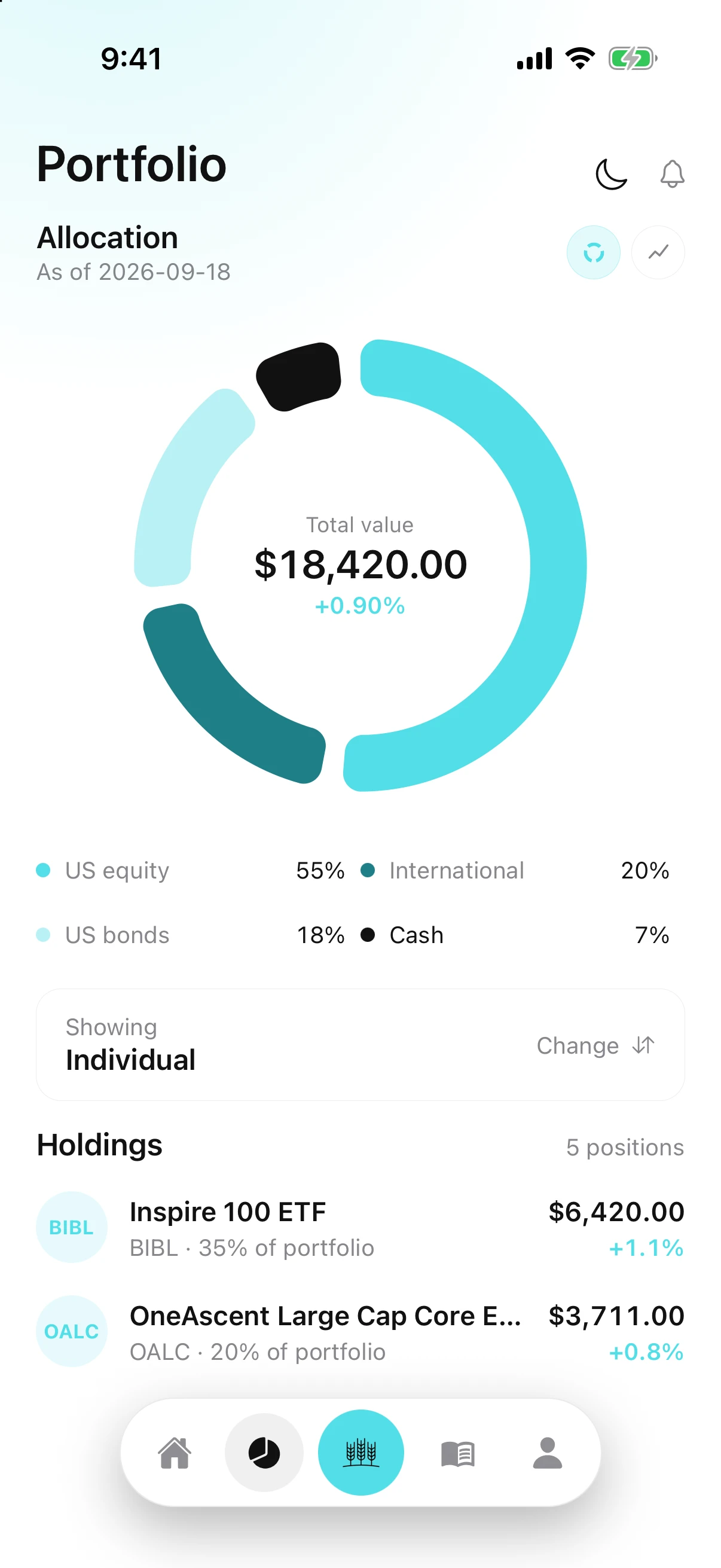
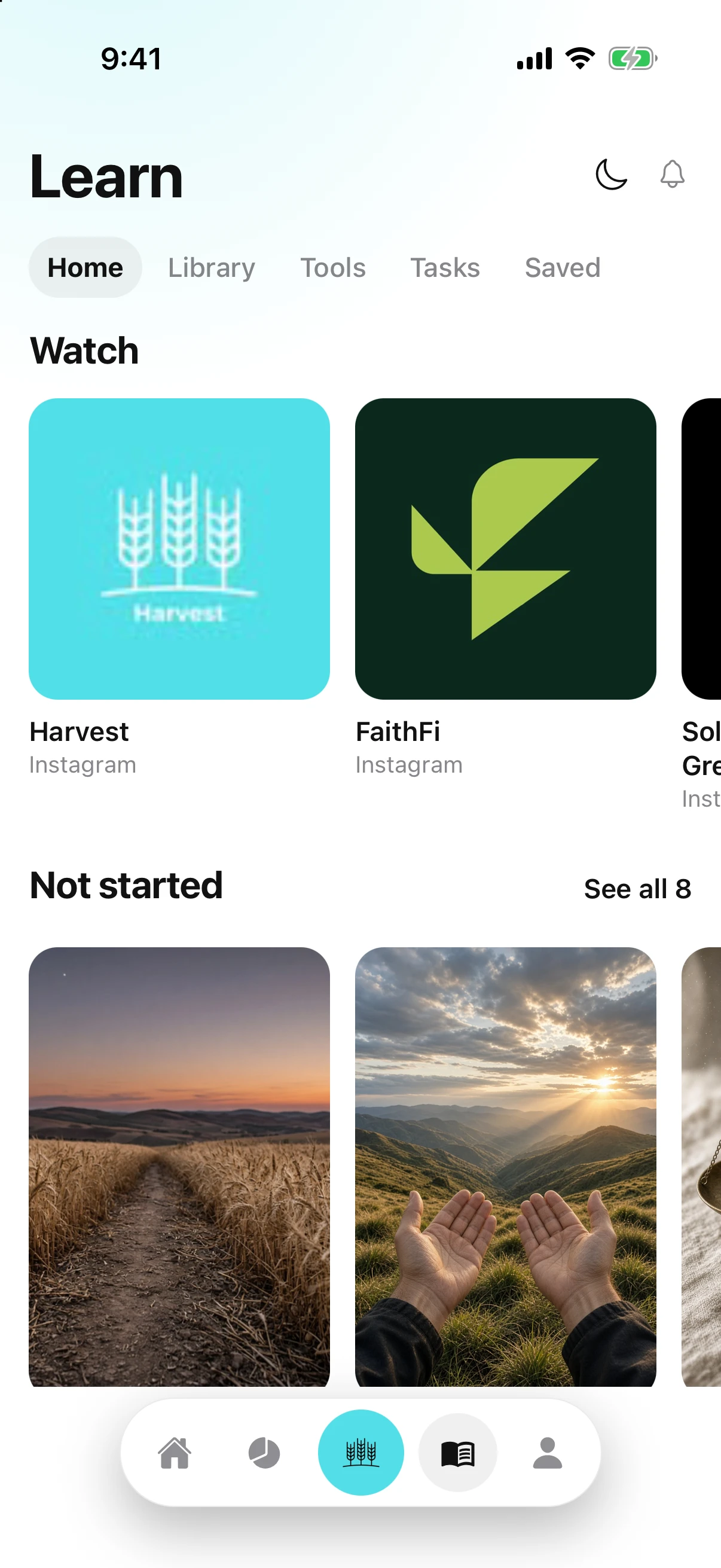
Harvest app screens with example data, not a customer's account.5
How Harvest puts it into practice
Harvest is automated investing for faith-driven investors. You answer a few questions, fund your account, and we handle the screening, rebalancing and reinvesting.
Faith-aligned ETF portfolios
We work with Tim Macready (Brightlight) to construct our faith-aligned ETF portfolios, applying avoid, embrace and engage.4
Five portfolios, Cautious to Bold
A short risk assessment matches each account with the portfolio that fits your goals: Cautious, Stable, Balanced, Adventurous, or Bold.
Managed for you
Our systems rebalance your portfolio when it drifts from the target allocation, check it every month, and reinvest dividends.6
One 0.30% annual fee
No subscription, no commissions, no account minimum. Individual, Roth IRA and Traditional IRA accounts.1
Questions about biblically responsible investing
Biblically responsible investing (BRI) is choosing investments through a biblical worldview. Investors avoid companies whose products work against biblical values, favor companies whose practices reflect them, and use shareholder engagement to encourage companies toward the good. It is also called faith-based, Christian, or faith-aligned investing.
No. Both screen investments using more than financial data, but they start from different places. ESG investing weighs environmental, social and governance factors, and its criteria vary by fund and rating provider. Biblically responsible investing starts from a biblical worldview, so its screens focus on issues like abortion, adult entertainment, gambling, tobacco and alcohol. Some companies pass one screen and fail the other.
Not necessarily, and there is no guarantee either way. Screening removes some companies and sectors, so a screened portfolio can perform differently from the broad market, better or worse, over any period. Investing involves risk, including the possible loss of money.
Yes. Harvest offers Individual, Roth IRA and Traditional IRA accounts, with the same faith-screened portfolios and the same 0.30% annual fee in each.
One 0.30% annual fee on the assets we manage. There is no subscription, no trading commission, and no account minimum. It’s billed monthly, in arrears, on your average daily balance, and deducted from your account. Example: on a $10,000 balance, the 0.30% annual fee is $30 a year, or about $2.50 a month. Fund expense ratios are charged by the funds themselves, and some custodian fees may apply, such as for certain transfers. Clients who join through a partner advisor may pay a different rate; see our Form ADV Part 2A and wrap fee brochure for full fee details.
All assets are custodied at Altruist. Harvest manages the portfolio.
Yes. Learn, our courses on biblical stewardship and investing basics, is free with no account needed. You can open an investing account whenever you’re ready.

Invest like God owns it all.
Faith-screened portfolios, managed for you. One 0.30% annual fee on the assets we manage, no subscription, no account minimums.1
Get the app